
EXPERIENTIAL WAYFINDING
Facilitating passenger movement without explicit instruction.
the challenge
Resolve a chronic confusion point without adding more signage.
the outcome
Isovist and visibility analyses of the corridor. Design of 38+ 2D and 3D moiré pattern variations. Physical scale models. Fabrication-ready design documentation.
TYPE:
Spatial Experience
CLIENT:
Massachusetts Port Authority (Massport) & Boston Logan Airport
Collaborators:
Fennick McCredie Architecture
KEYWORDS:
Environmental Design, Physical Prototyping, Spatial Perception
Similar projects:
Passenger Flow Analytics
Air Travel Design Gudie

The Space: A corridor that belongs to everyone — and no one
Walk through the Terminal C/E connector at Logan Airport and you'll pass half a dozen people going somewhere completely different. The arriving passenger from an international flight, still reorienting. The family circling, looking for rideshare pickup that doesn't quite make sense on any map. Airport staff, who take this route every day without thinking.
That's the core design problem. Conventional wayfinding fails this kind of space. A sign that resolves the question for one passenger type is noise to another. The space has no single purpose, so it can't have a single solution.
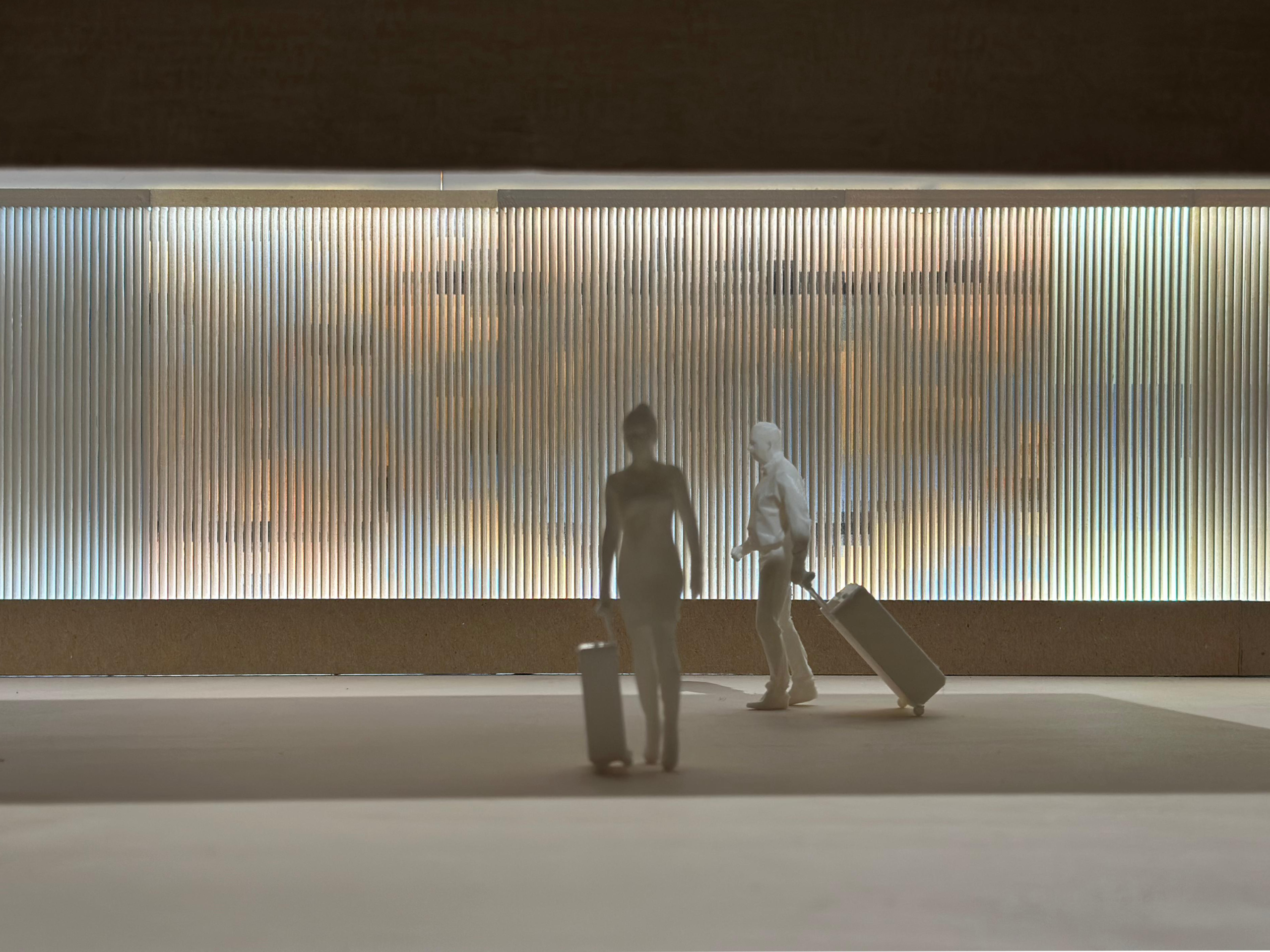
Orientation through perception, not instruction
The Design
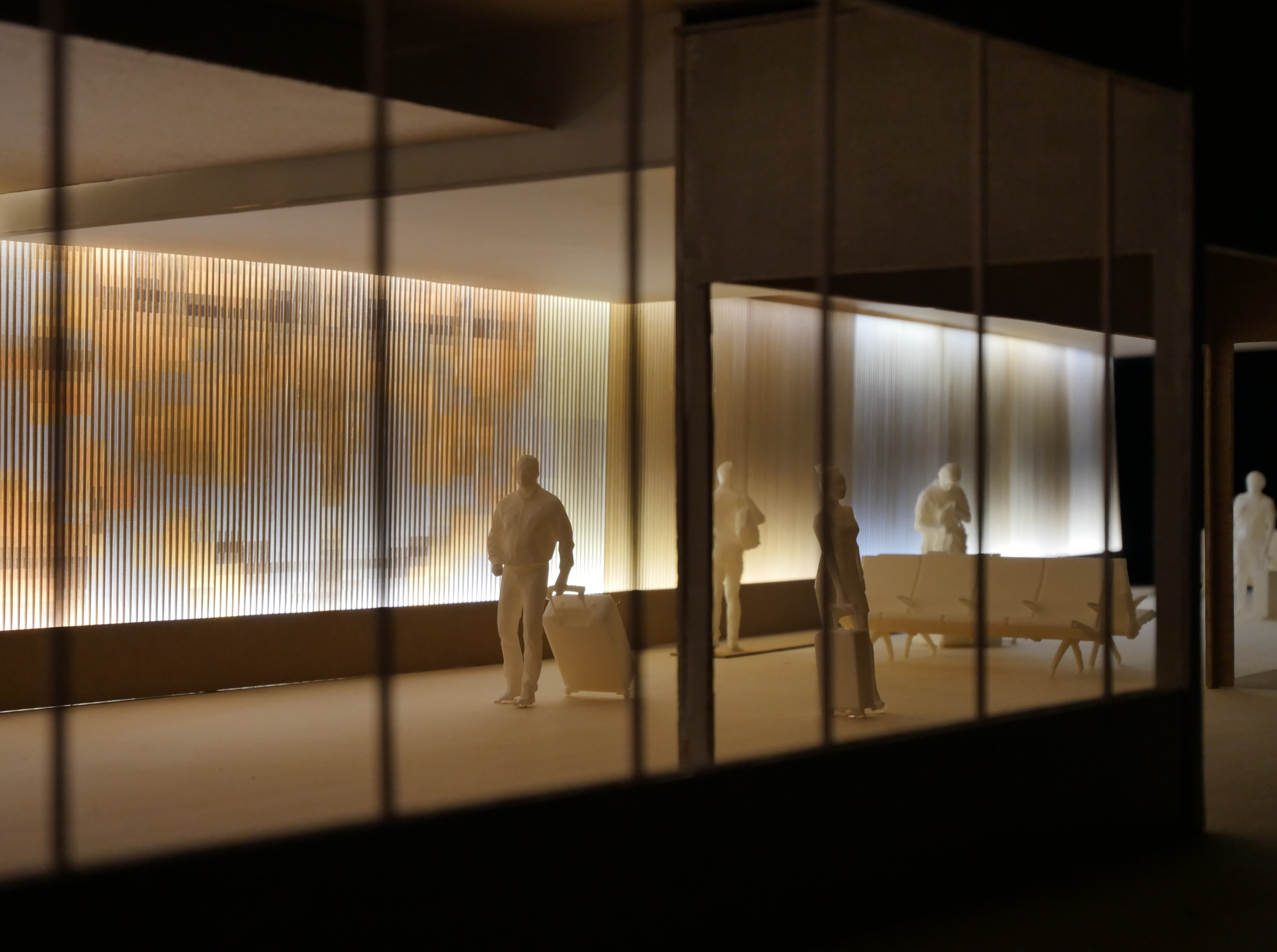
INVIVIA developed a wall installation using a moiré technique — the optical phenomenon created by layered parallel lines — to create an environment that responds to the body rather than addressing a specific user type. The perceptual effect shifts depending on where you stand, how fast you're moving, and the angle of approach. Embedded within the pattern is directional logic that reads differently from different vantage points — legible to arrivals passengers, connecting travelers, and ground transportation seekers simultaneously. The corridor doesn't tell you where to go. It orients you, without explanation. The effect is highly dynamic yet entirely analog, low-tech, easy to maintain.
Development
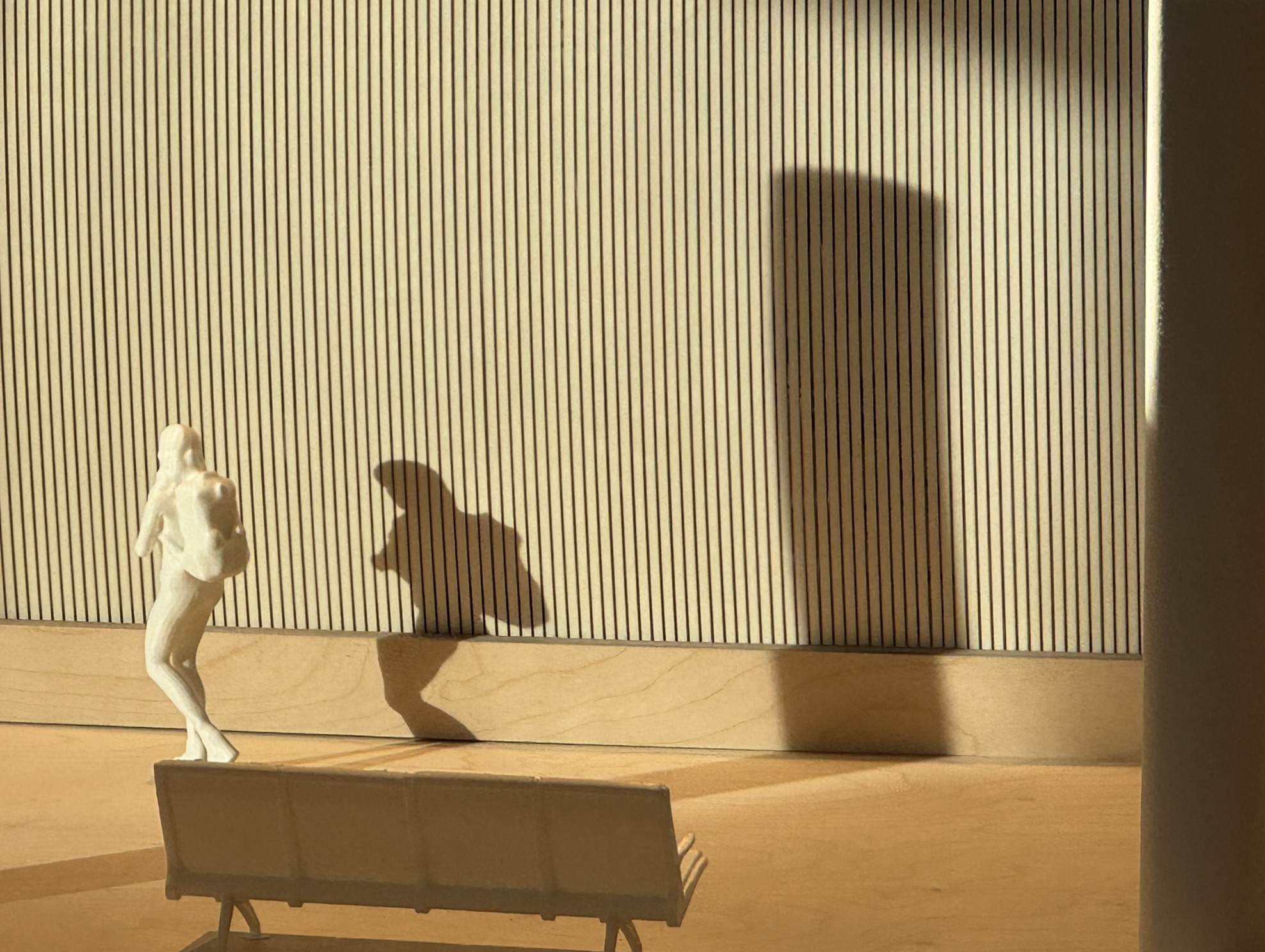
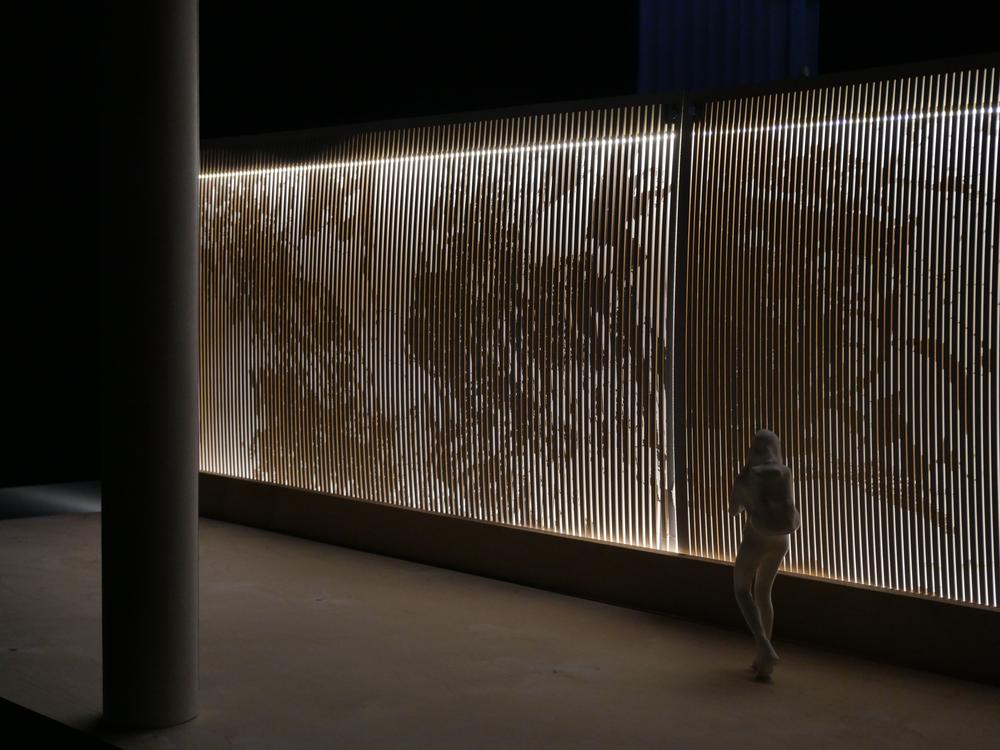
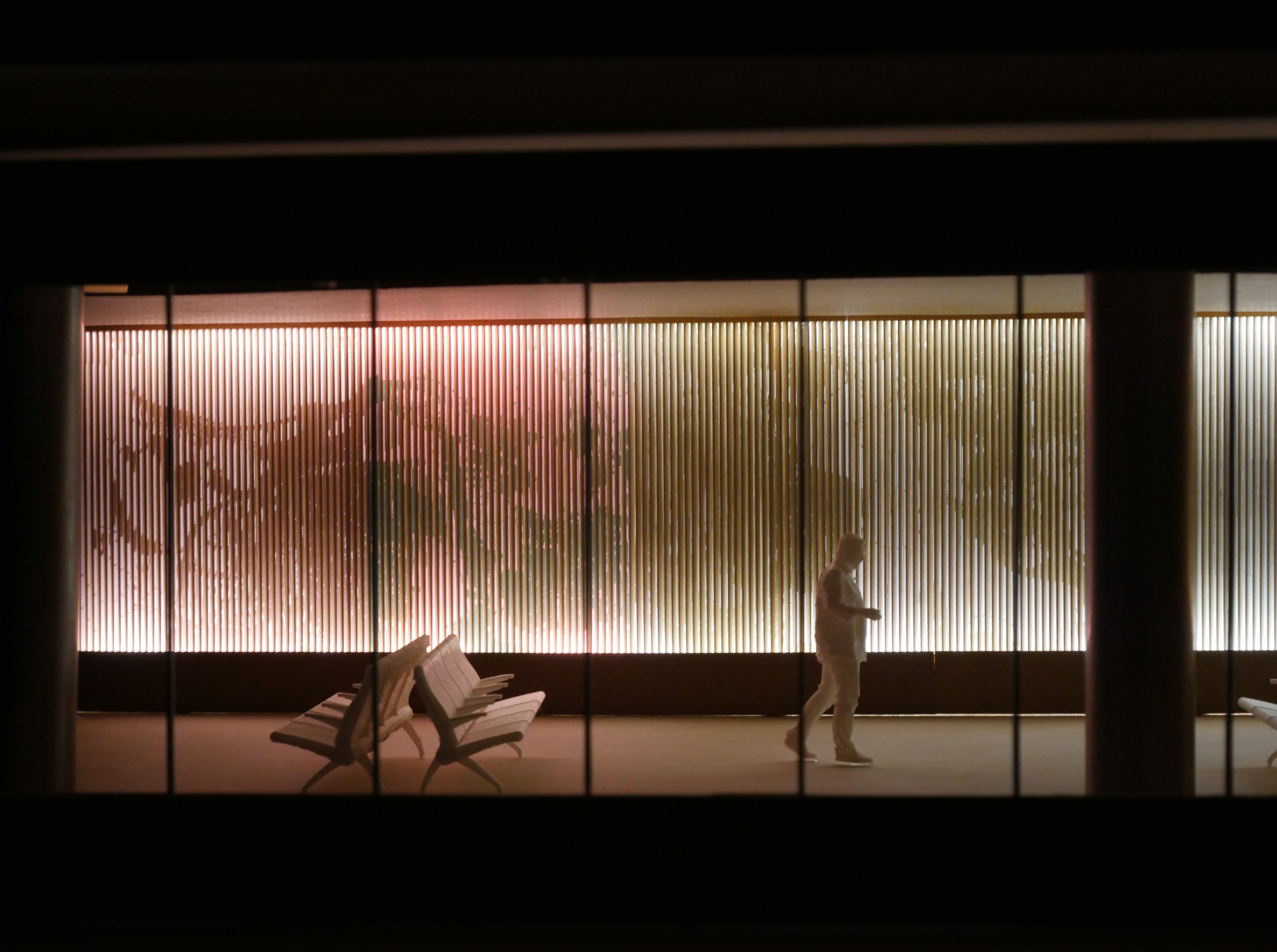
The process began with isovist analysis — mapping sightlines from every point in the corridor to understand what each user type can see, and when. This informed 38+ CAD variations in 2D pattern development, testing optical effect, slat geometry, and directional logic across user positions and movement speeds. Physical models validated how the effect performs in space under real lighting conditions and across the full range of sightlines.
Our Approach and Expertise