
MINIMAL+
Rethinking the Smart TV remote
the challenge
Replace the increasingly complex television remote with a simpler, more intuitive control system that can manage expanding Smart TV functionality without overwhelming users.
the outcome
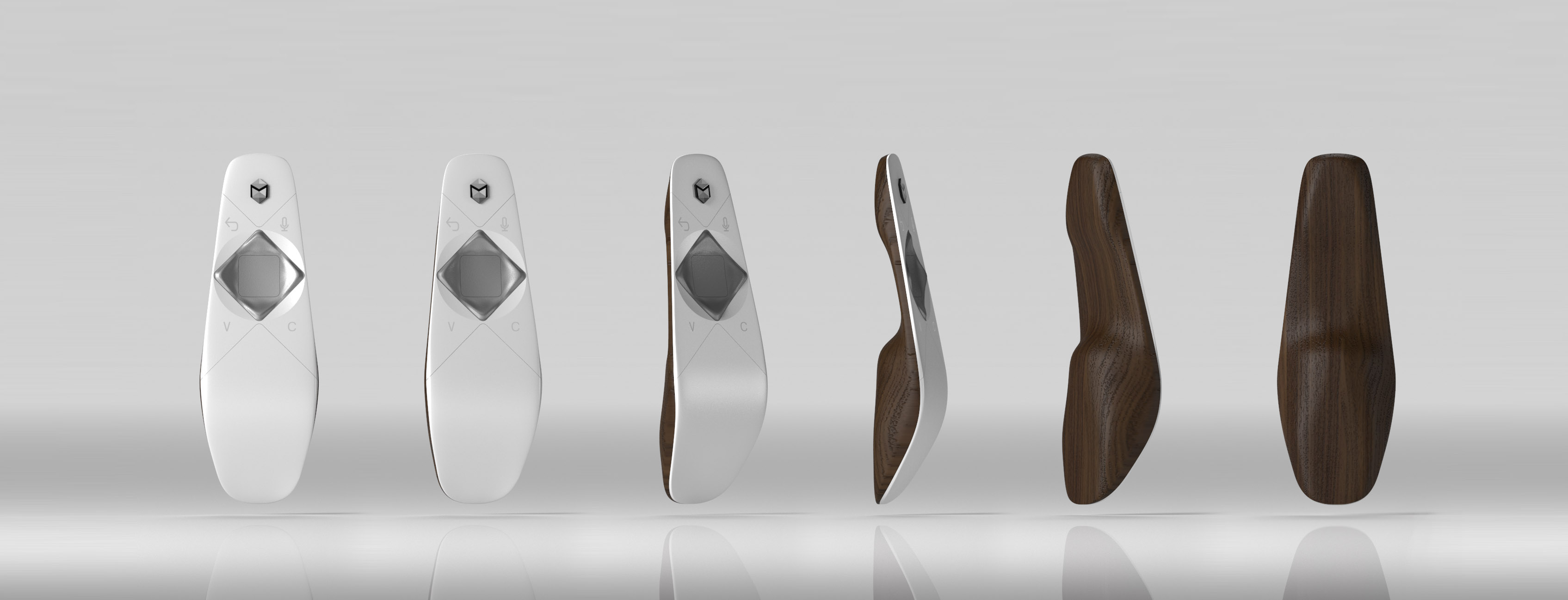
Design and prototyping of a premium remote and interface concept. Minimal physical controls combined with motion, voice, and contextual on-screen inputs create a more seamless viewing experience.
TYPE:
Interaction Design
CLIENT:
Samsung
KEYWORDS:
Industrial Design, Interaction Design, UX Strategy, Consumer Electronics, Interface Systems, Product Innovation, Human Factors
SIMILAR PROJECTS:
Tivoli
DesignWell
Project Vienna
A new input logic
For decades, remote controls evolved by accumulation. Every new feature introduced another button, another mode, another layer of complexity. Our research identified a growing disconnect between the increasing sophistication of home entertainment systems and the diminishing usability of the tools used to control them. Minimal+ began with a simple premise: the best interface is often the one that recedes from view.
By reducing physical controls to their essential functions and allowing context to shape behavior, the device became lighter, clearer, and easier to learn. Common actions remained tactile and immediate, while secondary functions surfaced only when needed through on-screen intelligence.
Physical Simplicity, Expanded Capability
Minimal + integrated gesture, directional input, squeeze sensing, voice search, and adaptive menus into a single cohesive system. Users could browse channels, scrub timelines, reorganize content, search naturally, or trigger shortcuts through intuitive physical actions rather than memorized button maps.
The concept also introduced profile recognition and personalized content pathways, anticipating a future in which devices respond to households dynamically. More than a remote, Minimal+ proposed a new relationship between user, device, and screen — one where control felt seamless, responsive, yet nearly invisible.


Our Approach and Expertise